Sauna anxiety is a real search for a reason: many regular users say they feel calmer after a session, and several mechanisms could explain it. The evidence is still limited, though, and a sauna is not a treatment for an anxiety disorder. Used as a quiet, screen-free habit next to proper care, it can ease the feeling of stress, and you can measure that effect on yourself.
Can a sauna reduce anxiety? What the evidence supports
The honest answer is: possibly, for the feeling of stress, and not as a therapy. Studies on heat exposure and mood are mostly observational or small trials. They measure things like self-reported mood or stress in specific groups, and an association between sauna use and feeling better does not prove cause and effect.
That caution matters because sauna mood benefits are easy to overstate. What follows are plausible mechanisms, presented as hypotheses.
Heat, cortisol and stress hormones
Heat is a physical stressor, followed by a period of relaxation once you step out. Findings on cortisol after sauna are mixed, so it is better to treat a cortisol effect as a hypothesis than as a promise. Many people simply report that the contrast between heat and rest feels like a reset.
Endorphins and dynorphins: the sauna high
The light, relaxed feeling after heat is often attributed to endorphins and related molecules. It is a plausible explanation for the lift in mood, but it is not something Sauna Metrics or an Apple Watch can measure. What you can record is how you feel, which is the part that counts day to day.
The parasympathetic rebound
During heat your heart rate rises. In the minutes after the session and the cool-down, many people feel a calm that fits a shift toward the parasympathetic (rest) side of the nervous system. Heart rate variability (HRV) can reflect this indirectly, but it is a trend indicator, not a direct reading of your mental state.
Infrared or Finnish sauna for mental health: which one suits you?
No sauna type has been shown to be better for anxiety. Choose according to the experience you want: a structured, sensory session or a quiet, solo one. The table summarizes the differences that matter for a calm-seeking routine.
| Type | Air temperature | Typical session | What helps calm |
|---|---|---|---|
| Finnish | 80–90 °C (176–194 °F) | 2 to 3 rounds of 8 to 15 minutes, each followed by a cool-down | Löyly (water on the stones) and the rhythm of rounds give attention an anchor |
| Infrared | Lower than Finnish; follow the manufacturer's range | Often one longer, quieter session | Gentle heat in a private cabin suits solo downtime |
| Steam room | Lower air temperature, very high humidity | Shorter sessions are common | Warm, enveloping air; comfort varies from person to person |
A Finnish sauna can be social or silent, depending on who is there and what you agree on. A private infrared cabin is easier for solo meditation. Both are matters of preference.
For the full breakdown, read infrared vs traditional sauna.
A mindfulness sauna routine: tech-free heat, slow breathing, cool-down
The sauna is one of the few places where a screen has no use. Leave the iPhone in the locker. If you have Sauna Metrics Pro, the Apple Watch can still record your heart rate while you stay offline.
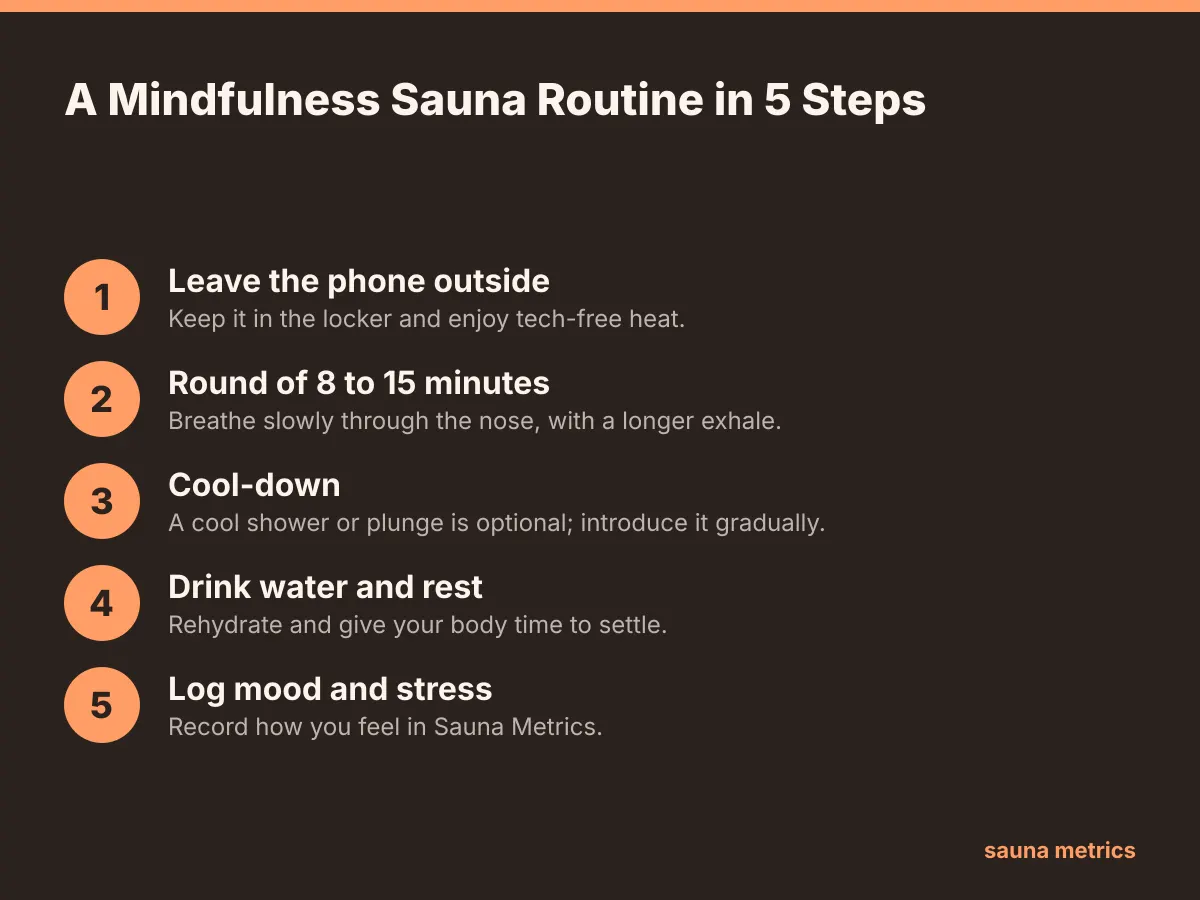
- Phone outside. Set your timer and rounds in Sauna Metrics before you go in, then leave the iPhone behind.
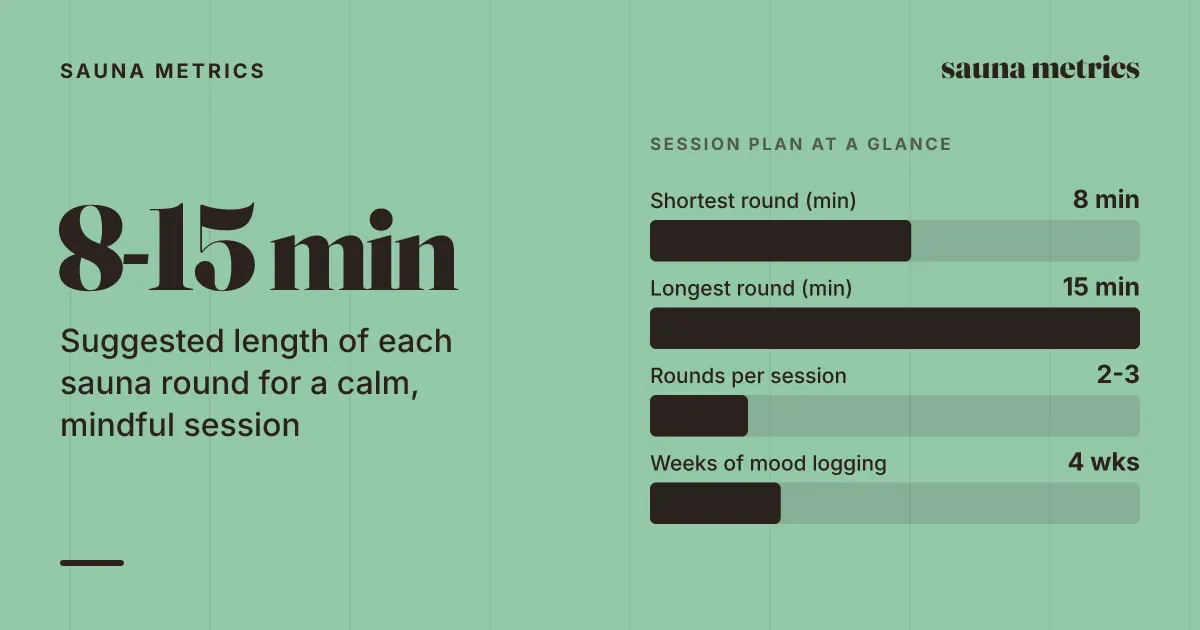
- Rounds of 8 to 15 minutes. Plan 2 to 3 rounds with a breather between them.
- Slow breathing. Breathe through the nose and make the exhale longer than the inhale. Avoid forced breath-holding or hyperventilation in the heat.
- Cool-down. A cool shower is enough. A cold plunge is optional and a strong stressor, so introduce it gradually. Some people find it clears the mind.
- Water and rest. Drink water, sit for a few minutes, then log how you feel.
Evening sessions can affect sleep, for better or worse depending on timing. Our guide to sauna before bed timing covers the details, and this article on how to improve your sleep quality goes further.
How to measure your own stress relief: mood, stress and HRV
Most pages on sauna stress relief explain theory and stop there. You can test it on yourself with a simple protocol, as long as you keep inputs, measurements and estimates separate.
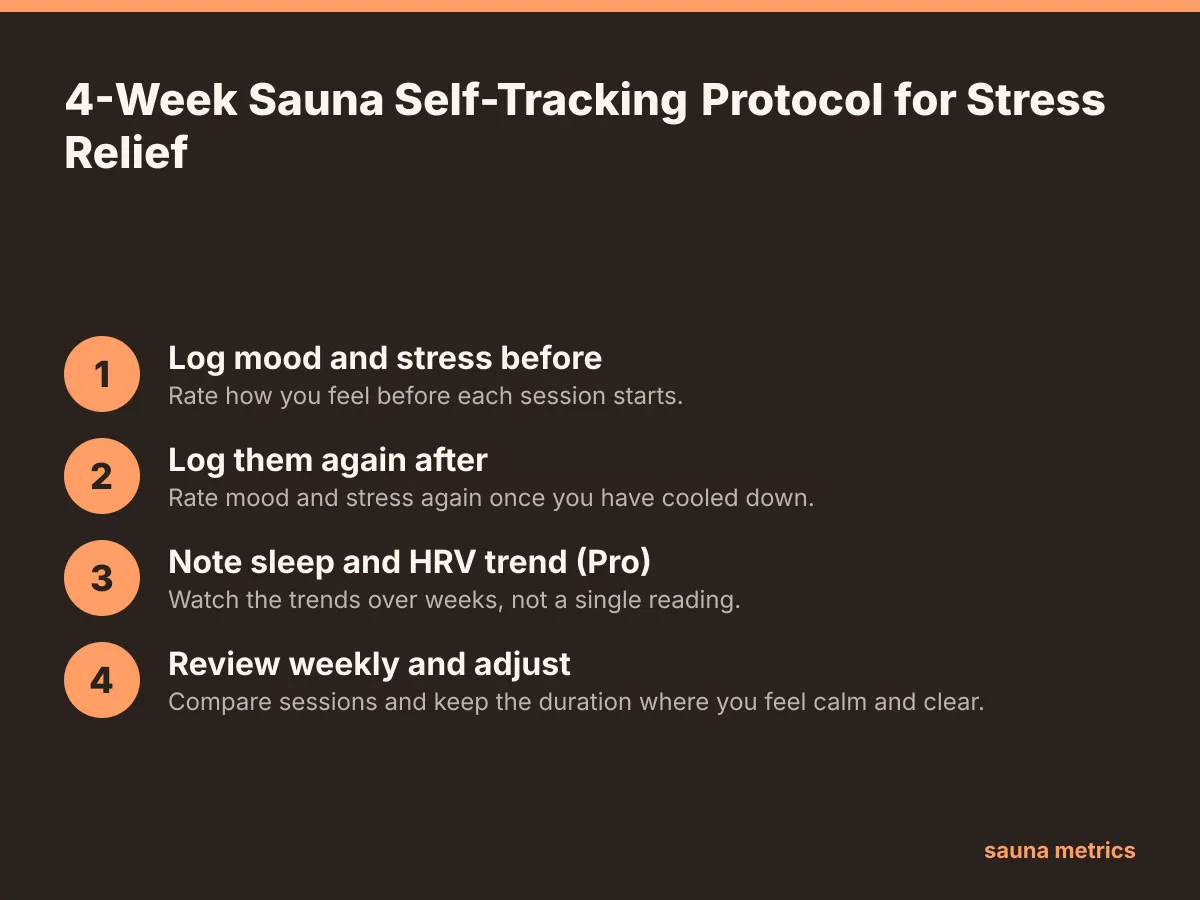
In the free version of Sauna Metrics, you log mood and stress before and after each session. These are your own inputs, and they are the most relevant data for how you feel. Add the sauna type, temperature, rounds and cool-down so you compare like with like.
With Pro, the Apple Watch adds live heart rate, HRV and recovery, plus sleep analysis from Apple Health. These are measurements, and they depend on your equipment and permissions. HRV moves with sleep, alcohol and training, so read trends over weeks and never a single reading. None of it is a diagnosis.
To find your ideal duration, compare how your mood changes after sessions of different lengths, for example 8, 12 and 15 minutes. Keep the length where you feel calm and clear without lightheadedness. Your data stays on the device, with no account.
- Week 1 to 4: log mood and stress before and after every session.
- Note how you slept that night.
- With Pro, check the HRV and sleep trend.
- Each week, review and adjust the duration.
Sauna anxiety: can a sauna trigger it? Safety and comfort limits
Yes, it can feel that way. Heat raises your heart rate and causes sweating and flushing, which resemble panic symptoms. Knowing that the sensations come from the heat can lower the fear around them.
- Lower the temperature, shorten the round or sit on a lower bench.
- Step out as soon as symptoms rise; there is no target to reach.
- Drink water before and after, and avoid alcohol.
- Treat lightheadedness as a signal to cool down and stop.
- Use the sauna temperature guide to pick a comfortable heat.
Your sauna stress-relief checklist and next step
| Step | What to do |
|---|---|
| Type and temperature | Choose a sauna you find comfortable and note the temperature |
| Rounds | 2 to 3 rounds of 8 to 15 minutes |
| Phone | Leave it outside the cabin |
| Breathing | Slow nasal breaths, longer exhale |
| Cool-down | Cool shower; cold plunge only if you are used to it |
| Water | Drink before and after, no alcohol |
| Log | Mood and stress before and after |
| Review | Once a week, compare sessions |
After four weeks, look at your average mood change, the sessions that felt best, and with Pro, your HRV and sleep trends. Log your next session in Sauna Metrics to start that record.
How to reassure someone with anxiety?
Listen without minimizing what they feel, stay calm, and offer simple support such as a quiet walk or a glass of water. Do not push them into a sauna or any activity that raises their heart rate. If anxiety persists, encourage them to talk to a health professional.
What is chronic and severe anxiety?
It is anxiety that lasts for months, shows up most days and interferes with work, sleep or relationships. Only a qualified professional can diagnose it. A sauna cannot assess or treat it.
What are some effective ways to manage stress and anxiety?
Regular sleep, physical activity, slow breathing, less alcohol and caffeine, and time away from screens all help many people. Sauna can be one calming routine among these, not a replacement for care when anxiety is significant.
What are some self-help strategies for anxiety and depression?
Keep a regular routine, move daily, get daylight, stay in contact with people you trust and track your mood to spot patterns. Seek professional help if symptoms last or worsen. If you have thoughts of self-harm, contact local emergency services or a crisis line right away.