Why do I get a headache after the sauna?
A sauna headache most often comes from a mix of dehydration, heat stress and blood pressure shifts. The same factors explain why many people feel unwell after a session: tired, dizzy, thirsty or slightly nauseous. These are commonly described mechanisms, not a diagnosis for any one person.
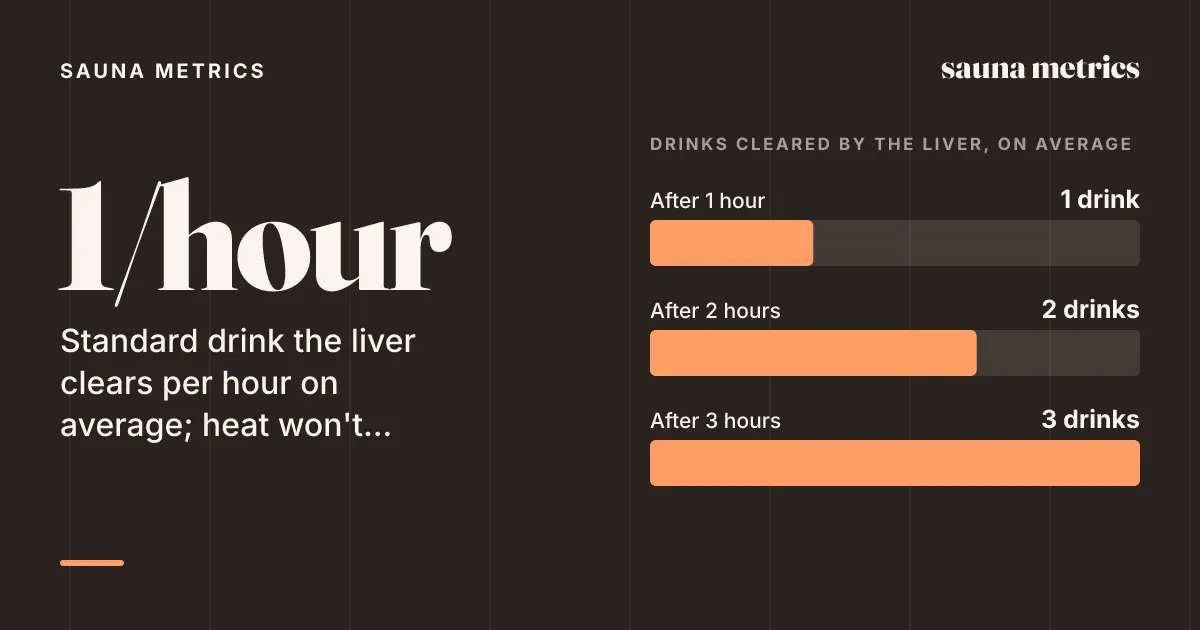
Dehydration and electrolyte loss. Sweat removes water along with sodium, potassium and magnesium. Sauna dehydration is the most common trigger, and it builds faster when you start a session already thirsty or after alcohol.
Heat stress. Your body works to keep its core temperature stable. A long or very hot round raises that load.
Vasodilation. Blood vessels widen to release heat, and blood pressure can drop, especially if you stand up quickly afterward. That can leave you lightheaded, with a heavy head.
Tension headache or migraine. A tension headache feels like dull, band-like pressure. A heat-triggered migraine is more often throbbing, sometimes with light sensitivity or nausea. Only a doctor can tell which one you have.
How to get rid of a sauna headache
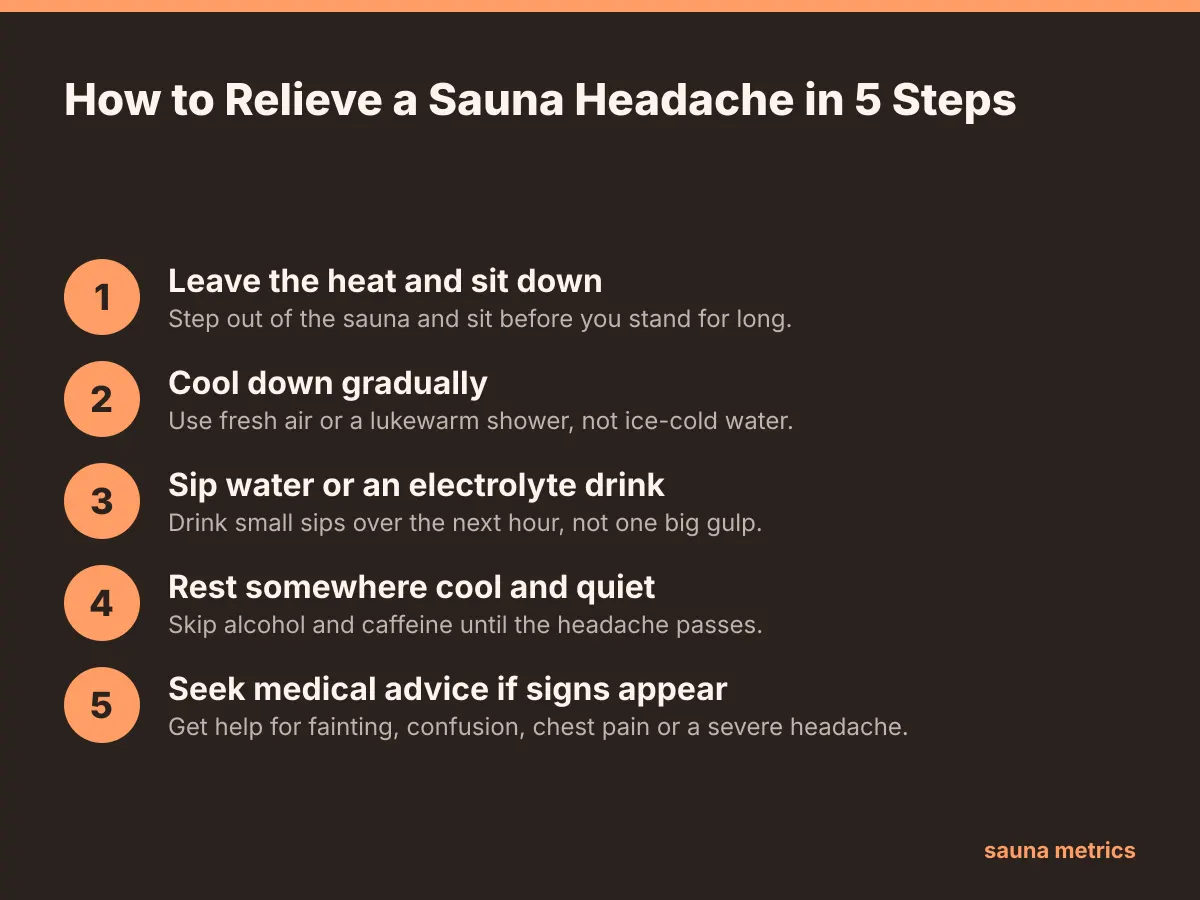
Leave the heat, sit down and rehydrate in small sips over the next hour. Gulping a large volume at once is less comfortable and does not work faster.
Plain water is enough after a short session. After a long, heavy-sweat session, minerals matter too, so a balanced electrolyte drink or a salty snack can help. More detail is in our guide to proper hydration and electrolytes.
Cool down gradually with fresh air or a lukewarm shower. Avoid standing up abruptly, and skip the ice-cold plunge while you already feel unwell. Then rest in a cool, quiet room and avoid alcohol and caffeine until the headache has passed.
Over-the-counter pain relief may help once you are hydrated. Check the label and your own medical situation, and ask a pharmacist or doctor if unsure. Do not take it before a session to prevent a headache, because it can mask warning signs.
How to prevent a sauna headache: find your personal threshold
Prevention starts before the session. Drink water in the hour before, ahead of thirst, and do not begin already dehydrated.
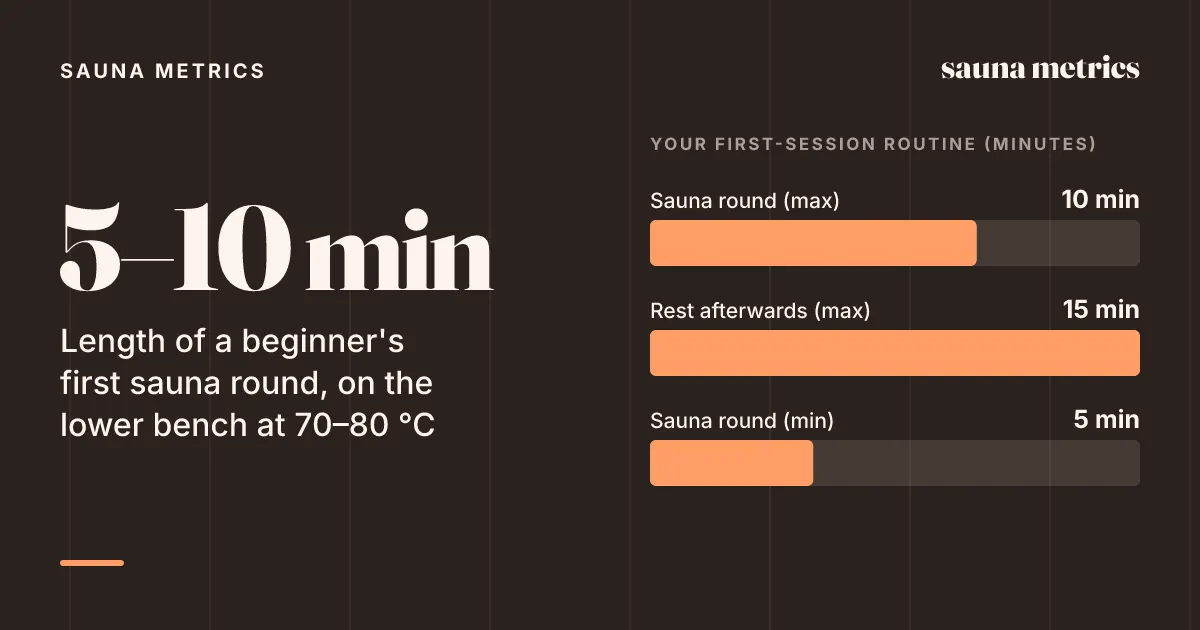
Many people reach their limit around 15 to 20 minutes per round. Temperature shifts that limit: a session may feel fine at 80 °C (176 °F) and trigger pain at 95 °C (203 °F). Our ideal sauna temperature for each type of session gives the usual ranges, and the first sauna session step by step helps if you are new.
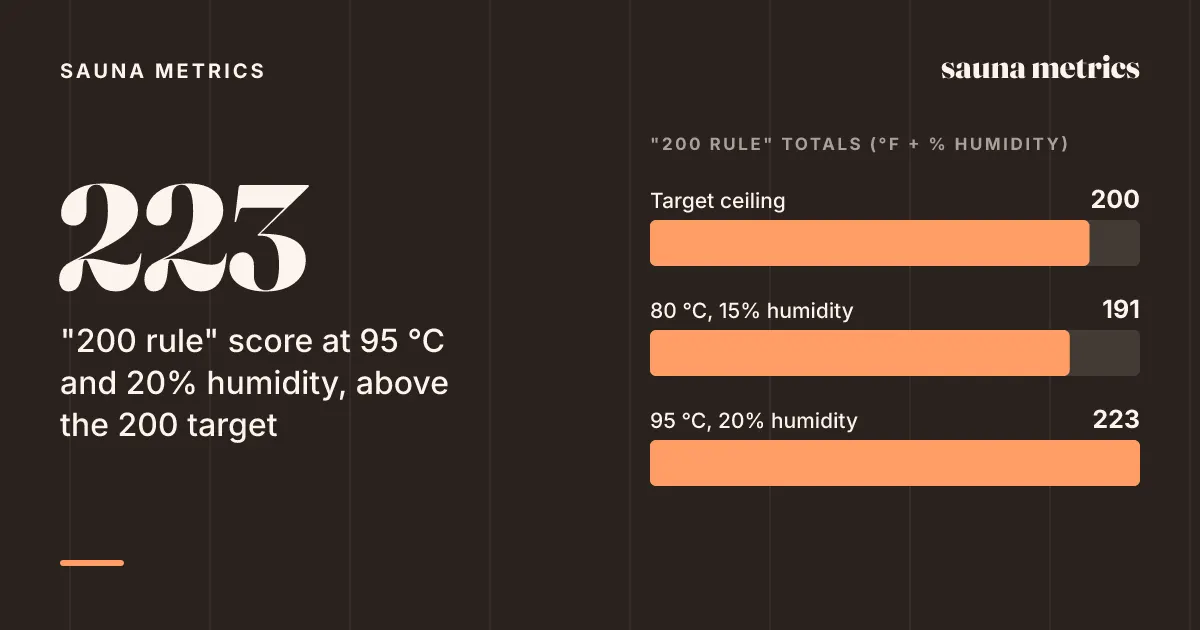
The informal "200 rule" adds the temperature in °F and the humidity in %, and aims to keep the total near or under 200. For example, 176 °F (80 °C) with 15% humidity gives 191, while 203 °F (95 °C) with 20% gives 223. It is not a validated medical standard. Use it as a reference point to test, especially when comparing hot-dry and hot-humid setups such as infrared vs traditional sauna heat and humidity.
| Session | Temperature | Humidity | Duration | Water drunk | Headache |
|---|---|---|---|---|---|
| A | 80 °C (176 °F) | 15% | 12 min | 500 ml | No |
| B | 90 °C (194 °F) | 15% | 18 min | 300 ml | Mild |
| C | 95 °C (203 °F) | 20% | 20 min | 250 ml | Yes |
Sodium, potassium and magnesium are lost in sweat. Food and a balanced electrolyte drink can help after heavy sweating, but this is general guidance, not a promise of results. If you have a kidney or heart condition, ask your doctor first.
As for 30 minutes in the sauna, there is no reliable equivalence to a workout. Heart rate can rise, and calorie figures are estimates that vary by person. The useful metric is how you feel and your own data.
Track your sessions to find the trigger
Generic advice cannot tell you which variable affects you. A log can. In Sauna Metrics, temperature, humidity, water and mood are inputs you enter. Heart rate is a measurement read from Apple Health or Apple Watch, depending on your equipment and permissions.
Log your sauna sessions with the timer and rounds, temperature, humidity, water drunk and cool-down. Then use the session note to record any headache, its intensity and when it started.
After a few weeks, review the history. You may see headaches only above 90 °C (194 °F), after rounds longer than 15 minutes, or when water intake was low. This is an observation of your own habits, not a diagnosis.
Change one variable at a time, such as temperature, duration or water, for a few sessions and compare. Pro adds live Apple Watch heart rate, recovery and sleep trends, plus electrolyte tips based on estimated sweat loss. That sweat figure is an estimate, not a measurement.
When to see a doctor for a headache after sauna
A mild headache that eases with fluids and rest is typical of heat exhaustion. These signs are not typical:
- repeated vomiting or nausea
- strong dizziness or fainting
- confusion
- chest pain
- persistent visual disturbances
- a sudden severe headache
- a headache lasting more than a day
Seek urgent medical help for the severe symptoms. A headache after every session also deserves a medical opinion. Review sauna contraindications for heart conditions, blood pressure issues, pregnancy, alcohol and medication. If you can, bring your session log to the appointment.
Your sauna headache checklist
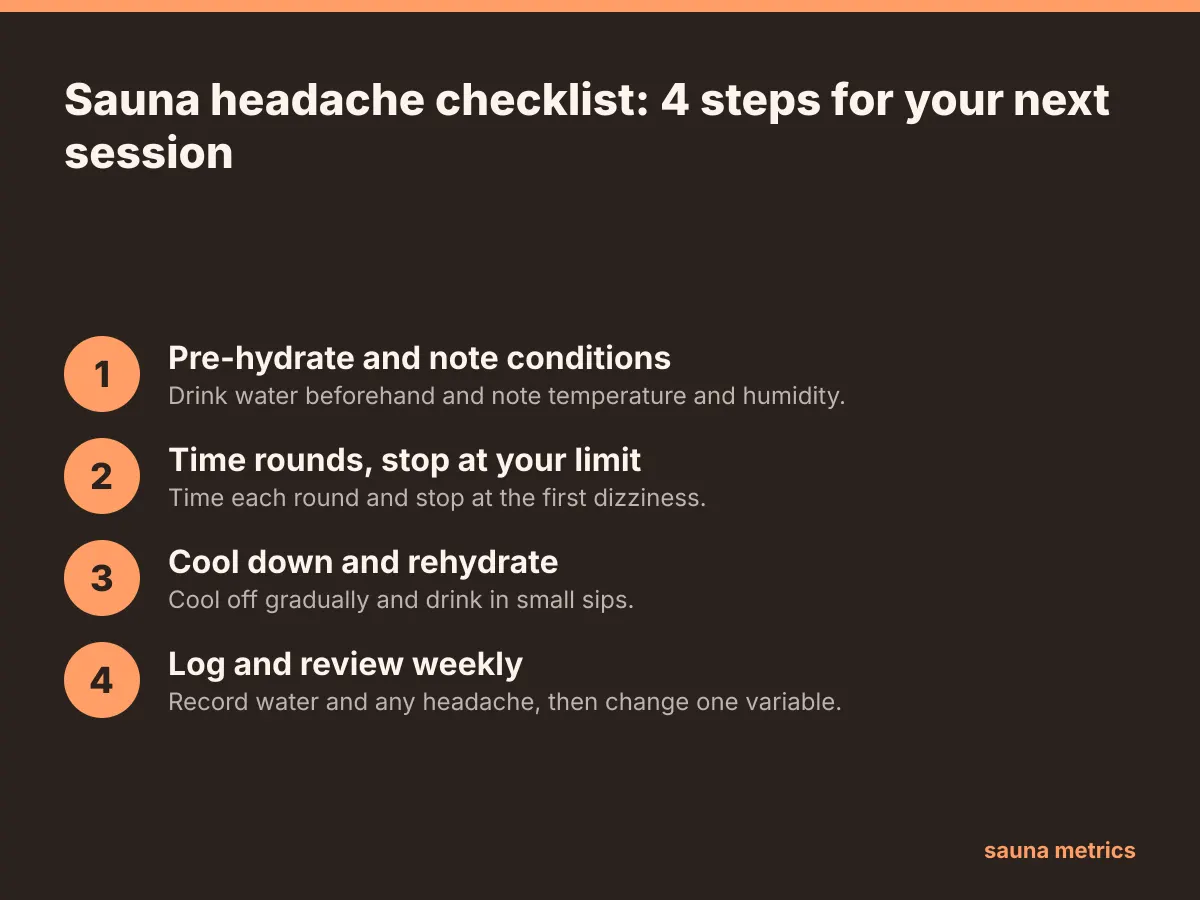
- Before: drink water, eat something light, skip alcohol, note temperature and humidity.
- During: time each round, stop at the first dizziness, keep to the duration you have tolerated.
- After: cool down gradually, rehydrate in sips, add minerals after heavy sweating, log water and any headache.
- Weekly: review sessions, change one variable, keep the threshold that works.
Open Sauna Metrics to log your next session and start building data on your own limits.
What is the 200 rule sauna?
It is an informal rule of thumb that adds the temperature in °F and the humidity in %, aiming for a total near or under 200. It is not a validated medical standard, so use it as a reference point to test.
What is the 5 4 3 2 1 rule for migraines?
It is not an established sauna or medical rule that we can confirm. For migraine management, ask a doctor.
Why do I feel unwell after a sauna?
Common reasons are fluid and electrolyte loss, heat load and blood pressure drops from vasodilation. Severe or repeated symptoms need medical advice.
What is 30 minutes in the sauna equivalent to?
There is no reliable equivalence to a workout. Heart rate can rise, and calorie figures are estimates that vary from person to person.