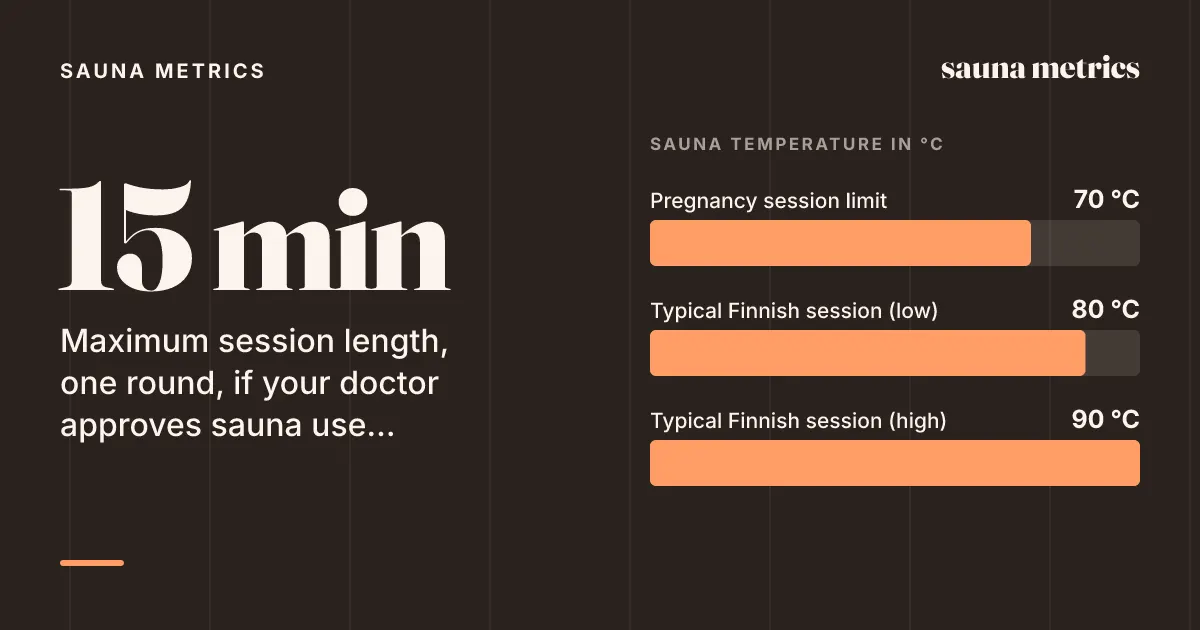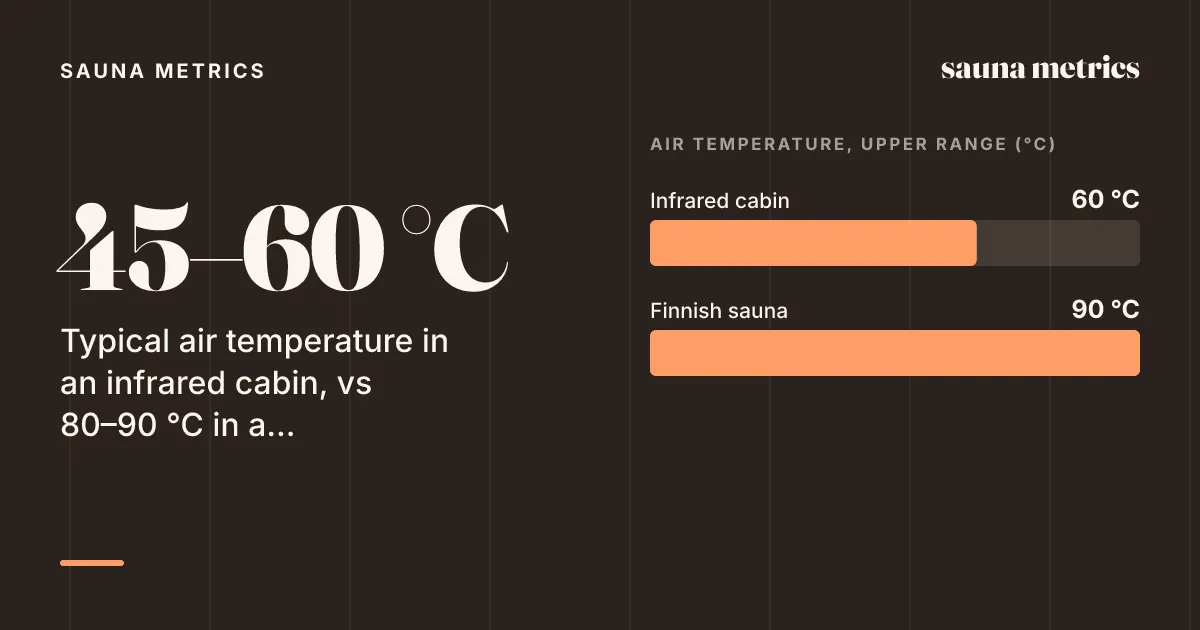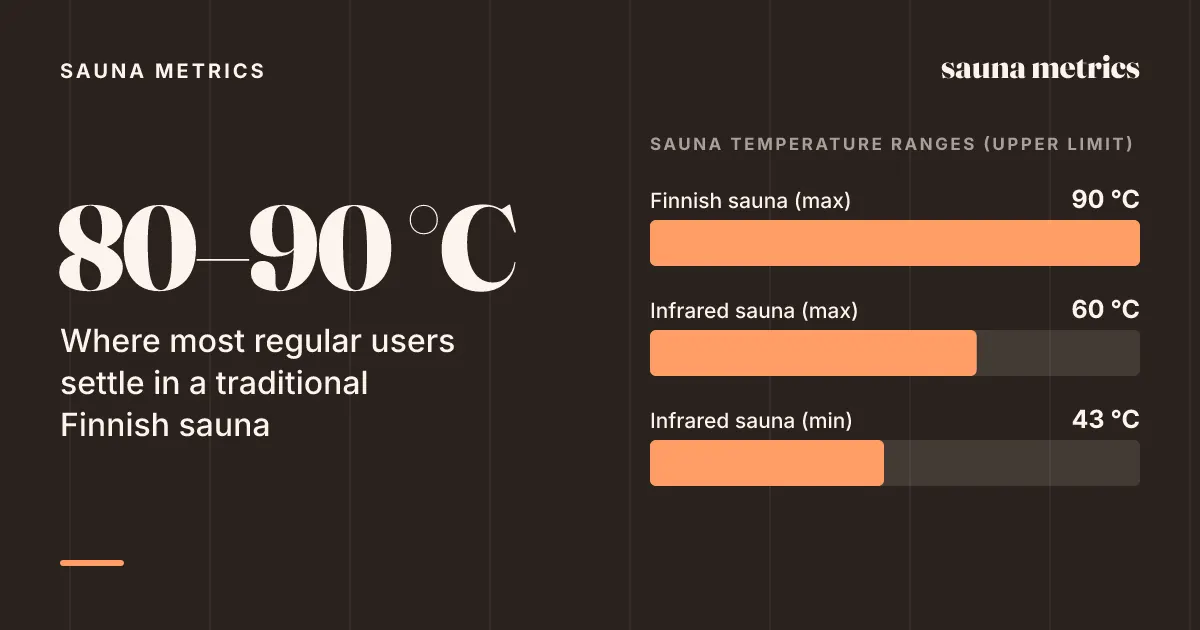
The ideal sauna temperature depends on the sauna type. A traditional Finnish sauna runs at 65–90 °C (150–195 °F), and most regular users settle around 80–90 °C (176–194 °F). An infrared sauna runs much lower, at 43–60 °C (110–140 °F). Within those ranges, the best sauna temperature is the one you tolerate comfortably and recover from well.
What is the ideal sauna temperature?
For a traditional sauna, the reference range is 65–90 °C (150–195 °F). Beginners usually start at the lower end, and experienced users often sit at 80–90 °C (176–194 °F). For infrared, the range is 43–60 °C (110–140 °F).
The number on the thermostat is only part of the picture. A Finnish sauna usually has low humidity, and throwing water on the stones (löyly) briefly raises the felt heat without changing the thermostat reading. The same 80 °C can feel mild after a dry stretch and sharp right after a ladle of water.
Where the thermometer hangs also matters. Air is hotter near the ceiling, so the upper bench can feel 10 °C or more above the lower one, depending on the sauna. If your thermometer sits high, your own bench is cooler than the display suggests.
This is why a personal ideal temperature makes more sense than a single figure. It varies with your tolerance, the sauna type and the day. Note that the temperature you enter in Sauna Metrics is a user input, read from your thermometer or thermostat, not something the app measures.
Traditional vs. infrared: why the temperature numbers differ
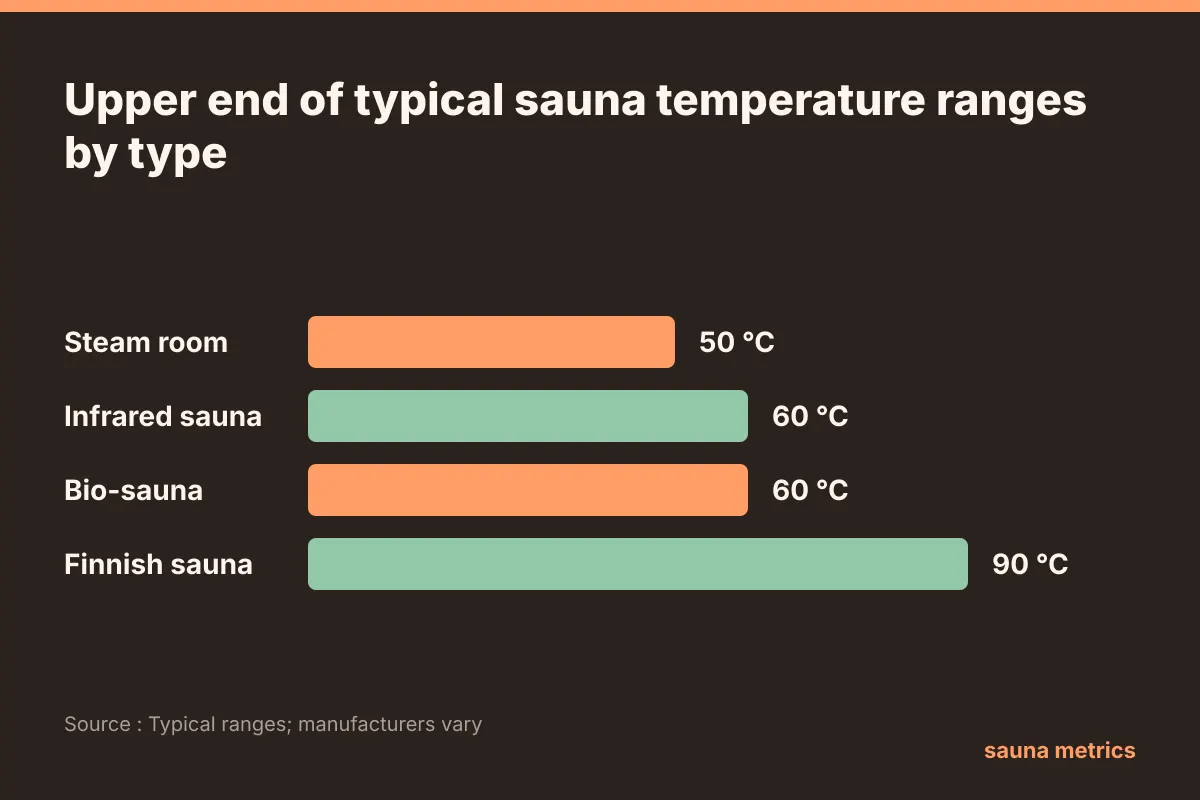
A traditional sauna heats the air with a stove, and that hot air warms your skin (convection). It needs a high air temperature to feel intense. An infrared sauna uses emitters that warm the body more directly (radiant heat), so a much lower air temperature already feels strong.
| Sauna type | Typical temperature | Humidity | Typical round length |
|---|---|---|---|
| Finnish (traditional) | 65–90 °C (150–195 °F) | Low, raised briefly by löyly | 8–15 min |
| Infrared | 43–60 °C (110–140 °F) | Low | 15–30 min |
| Bio-sauna | 50–60 °C (122–140 °F) | Moderate | 15–20 min |
| Steam room | 40–50 °C (104–122 °F) | Near saturation | 10–15 min |
For a traditional session, aim for 80–85 °C (176–185 °F) and use löyly in small amounts to adjust how hot it feels instead of raising the thermostat. For an infrared session, 50–60 °C (122–140 °F) is a common working range once you are used to it.
If infrared is your main format, our article on what the science shows on infrared sauna benefits looks at what research does and does not support.
Is 200 °F (93 °C) too hot for a sauna?
93 °C is above the usual Finnish range, and it is not a number to chase. If you are in a sauna that hot, shorten the round and sit on a lower bench rather than pushing through. More heat does not mean a better session.
Figures like 200 °F circulate online, including attributed to Joe Rogan. They come from conversations and anecdotes, and we cannot verify his setup or how long he stays in. What matters is your own tolerance, not a celebrity number.
Step out when you notice any of these signs:
- Dizziness or lightheadedness
- Nausea
- A pounding or racing heart
- A headache
- Confusion, weakness or cramps
Sauna temperature settings by goal and experience level
Build up gradually over several weeks instead of jumping to the top of the range. These are practical starting points for a Finnish sauna, not medical advice.
| Level | Temperature | Rounds |
|---|---|---|
| Beginner | 60–70 °C (140–158 °F) | 1–2 rounds of 5–10 min |
| Intermediate | 75–85 °C (167–185 °F) | 2–3 rounds of 8–15 min with cool-downs |
| Experienced | 80–90 °C (176–194 °F) | Upper end only if recovery stays good |
For relaxation and sleep, moderate heat works well, and finishing well before bedtime is a sensible default. Rather than assume a effect, check your own sleep data after evening sessions versus earlier ones.
For muscle recovery and athletes, there is no proven universal temperature. Research on heat exposure is mostly observational or based on small studies, and an association does not prove cause and effect. Test a few settings and compare. For round length, see our guide on how long to stay in.
How to find your personal sauna temperature with Sauna Metrics
Log the temperature, humidity and sauna type with every session. The timer tracks your rounds and breaks, so you know exactly what you did at each setting.
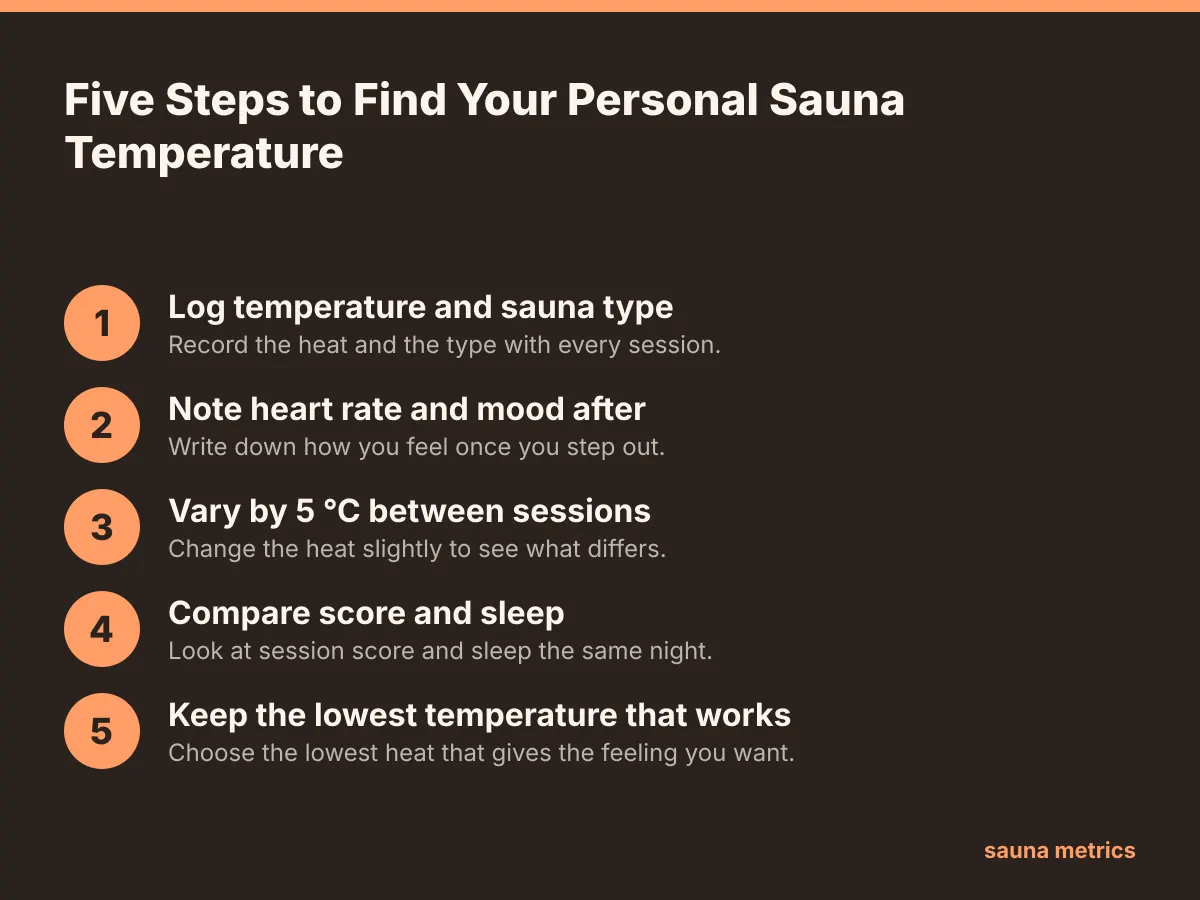
Keep the data types separate. Temperature, humidity and mood are inputs you enter. Heart rate comes from Apple Health or your Apple Watch. The session score out of 100 is a non-medical estimate, not a diagnosis. With Pro, the Apple Watch app lets you track your heart rate live during the session.
Then vary the setting by about 5 °C between sessions. Compare sessions at 70, 80 and 90 °C: score, heart rate, mood afterwards and sleep that night. These are associations in your own data, not proof that one temperature causes a result.
After 10 to 20 sessions, a pattern usually appears. Your sweet spot is the lowest temperature that gives the feeling and recovery you want.
Sauna temperature cheat sheet and next step
| Sauna type | Beginner | Regular | Upper limit |
|---|---|---|---|
| Finnish | 60–70 °C (140–158 °F) | 80–90 °C (176–194 °F) | 90 °C (194 °F) |
| Infrared | 43–50 °C (110–122 °F) | 50–60 °C (122–140 °F) | 60 °C (140 °F) |
| Bio-sauna | 45–50 °C (113–122 °F) | 50–55 °C (122–131 °F) | 60 °C (140 °F) |
| Steam room | 40–43 °C (104–109 °F) | 43–48 °C (109–118 °F) | 50 °C (122 °F) |
- Check the height of your thermometer.
- Log the temperature and sauna type.
- Hydrate before and after.
- Set a timer for each round.
- Leave at the first warning sign.
- Note how you feel afterwards.
Log your next session in Sauna Metrics and compare the results after a few weeks. Your own history will tell you more than any reference range.
What temperature is Joe Rogan's sauna?
Figures around 200 °F (93 °C) are quoted online, but they come from conversations and anecdotes, and we cannot verify his setup. Use your own tolerance as the guide.
How long should you sit in a sauna?
In a Finnish sauna, a typical round is 8 to 15 minutes, repeated two or three times with a cool-down between rounds. Infrared sessions are often longer, around 15 to 30 minutes at a lower temperature. Leave earlier if you feel unwell.
Is a 200 degree sauna too hot?
It is above the usual Finnish range of 65–90 °C (150–195 °F). If you are in one, keep the round short, sit low and leave at the first warning signs. It is not a target to aim for.
Should you shower after a sauna?
A lukewarm or cool shower is a common way to cool down and rinse off sweat. Let your breathing settle first, and drink water afterwards.