Sauna is not a proven way to lower sauna blood sugar levels. Heat can nudge glucose up or down during and after a session, and the direction depends on medication, food, hydration and the person. For anyone with diabetes, the useful question is how to stay safe and how to learn your own response.
Does sauna lower blood sugar? What heat does to glucose
In the heat, blood vessels in the skin dilate and more blood flows to the surface to release heat. Heart rate rises, often to a level comparable with light exercise. This is a comparison, not an equivalence: a sauna session does not replace exercise, diet or prescribed treatment.
In the short term, glucose can drift in either direction during and after a session. Sweating, fluid loss, a recent meal and insulin or tablets all play a part. In the long term, any link between regular sauna use and steadier glucose comes from limited, mostly small or observational studies.
It helps to separate three kinds of information. Heart rate read from Apple Health, and glucose from a meter or CGM, are measurements. Temperature, humidity and notes are your own inputs. Calorie or sweat figures, where an app shows them, are estimates.
Can regular sauna use improve insulin sensitivity in type 2 diabetes?
Possibly as a complement, never as a substitute. One proposed mechanism involves heat shock proteins, which cells produce under heat stress and which have been linked to insulin signaling. This remains a hypothesis and is not a proven effect in people.
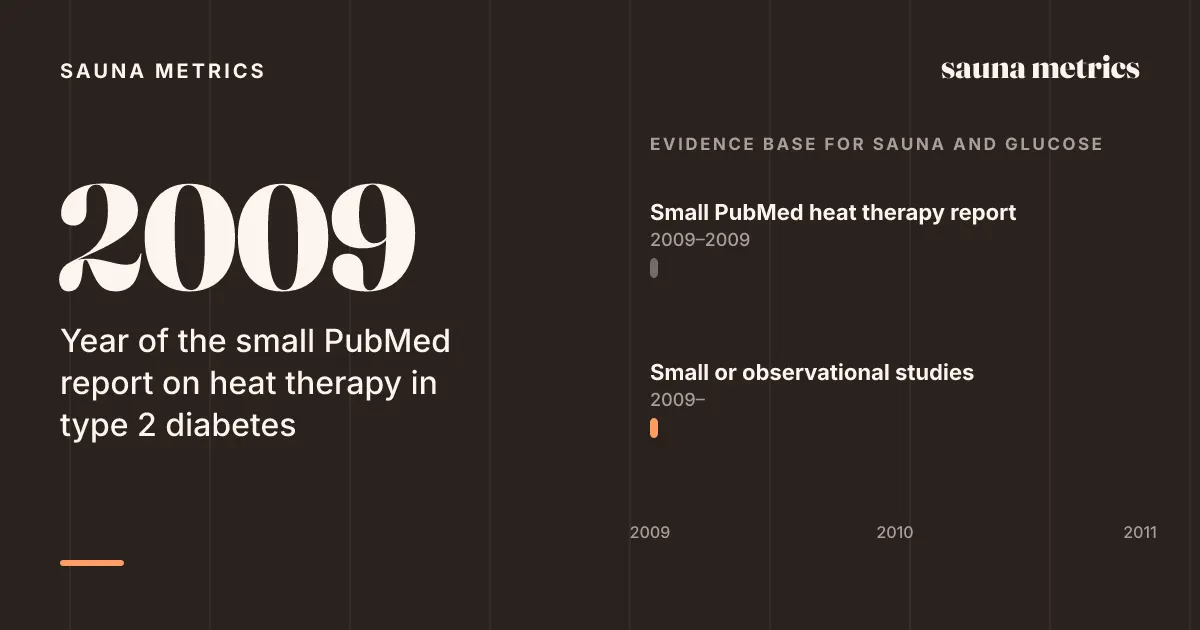
A 2009 report indexed in PubMed looked at repeated thermal therapy in people with type 2 diabetes. It was a small study, and we do not quote figures here: read the original abstract for what was measured and in whom. Small studies and observational associations do not prove cause and effect.
Is sauna therapy beneficial for people with type 2 diabetes? It may be supportive alongside standard care, but the evidence is not strong enough to promise a result. Discuss it with your doctor first.
What is the fastest way to reduce insulin resistance? There is no quick fix. Regular physical activity, sleep, body composition and medical guidance have far stronger support than heat. Sauna is at best an addition.
What do Chinese use to treat diabetes? Sauna is not a recognized treatment in any tradition we can point to. Any traditional remedy should be checked with a clinician, especially if you take medication.
Sauna and diabetes risks: hypoglycemia, insulin and never going alone
Heat increases skin blood flow, which may speed up the absorption of injected insulin. Glucose can then fall faster than expected. Treat this as a precaution to discuss with your care team, not as a fixed rule.
Dehydration, dizziness and low blood pressure add to the risk. They can also mask or mimic the symptoms of low glucose, so you may not know which one you are feeling.
Alcohol makes all of this harder to manage. Read why mixing heat and alcohol is risky, and see our general sauna safety guidelines for the basic rules.
Type 1 vs type 2: what changes for injections and pumps
- Type 1 and insulin users: injection timing and site matter, and pumps and sensors have manufacturer temperature limits. Check them before bringing a device into the heat.
- Type 2 on diet or oral medication: hypoglycemia risk is generally lower, but some medications raise it. Ask the prescriber.
- Everyone: individual variability is large, so decisions belong with a clinician.
Safety checklist for sauna users with diabetes: before, during, after
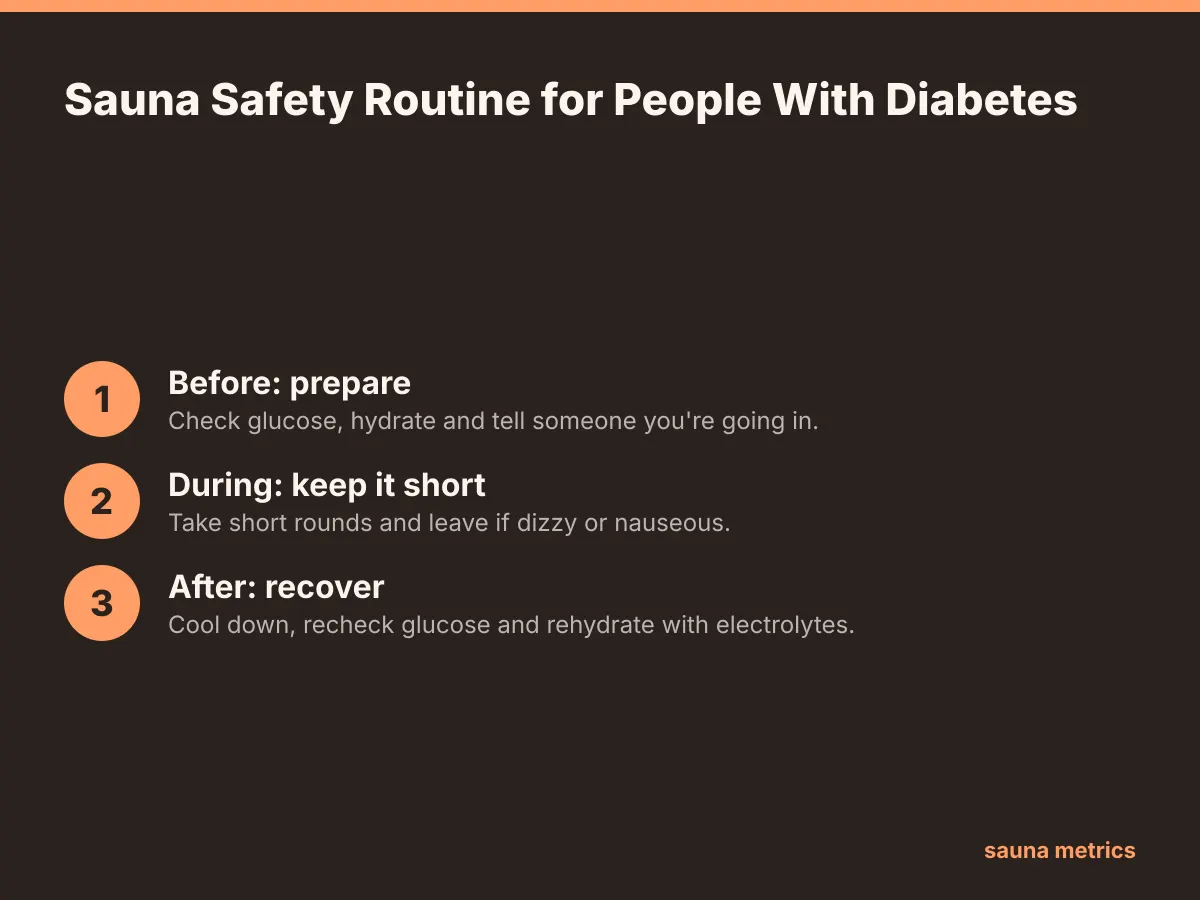
These are general precautions, not individual medical advice. Adapt them with your care team.
- Before: check your glucose. Skip the session right after an injection, or if your level is low or unstable. Eat as your care plan advises, hydrate, keep fast-acting carbohydrates within reach and tell someone you are going in.
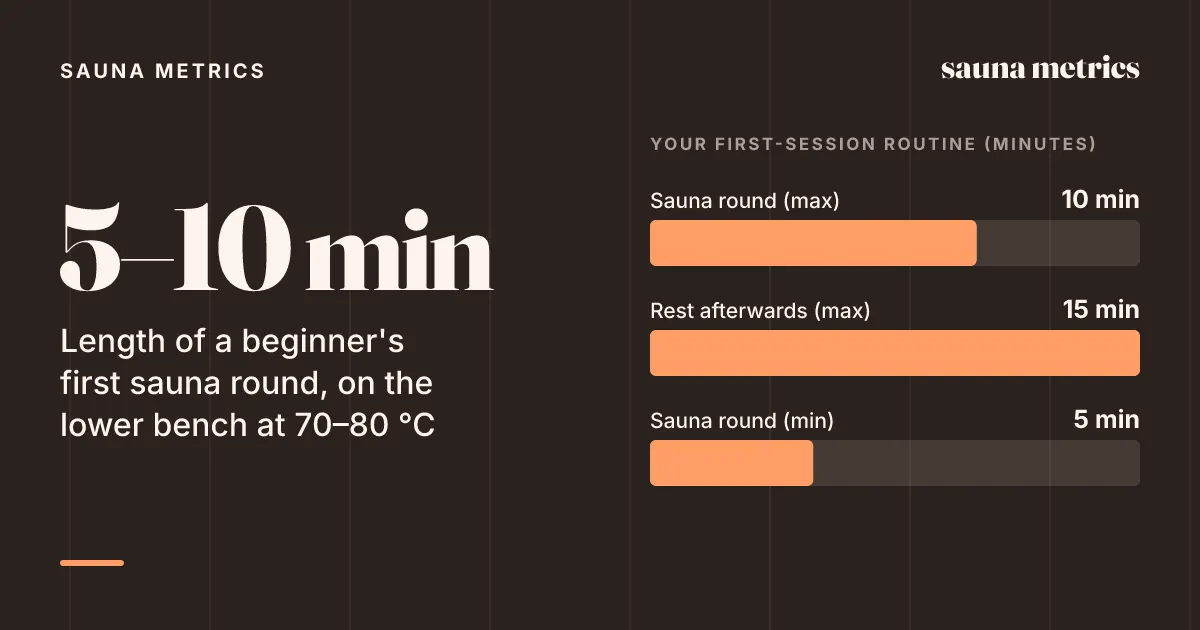
- During: keep rounds short and the temperature moderate (see the sauna temperature guide). Leave at once if you feel dizzy, nauseous, shaky or confused.
- After: cool down gradually, recheck glucose, and rehydrate with water and electrolytes. Stay alert for a delayed drop in the following hours.
Does sugar come out when you sweat? Sweat contains only trace amounts of glucose. Sweating is not a meaningful way to lower blood sugar, and the fluid loss is a reason to rehydrate.
Tracking your sauna blood sugar response with Sauna Metrics
Sauna Metrics does not measure glucose and does not diagnose anything. What it does is keep the context around each session, so you can look for your own patterns. You can track your sauna sessions with the timer and rounds, temperature, humidity, sauna type, cool-down and water.
Use the notes field to write down your glucose before and after, read from your meter or CGM. These are your inputs. After a few weeks, compare sessions to see which temperature and duration feel comfortable and stable for you.
With Pro, the Apple Watch app adds live heart rate, and the biometric dashboard shows HRV and sleep analysis. These are measurements from Apple Health and depend on your equipment and permissions. The trends are observations, not proof that sauna caused a change. If you use the sauna in the evening, see sauna before bed and sleep recovery.
Your data stays on your device. There is no account, no ads and no tracking.
Quick reference: sauna and blood sugar at a glance
| Topic | Summary |
|---|---|
| What heat may do | Raise heart rate and skin blood flow; glucose may drift up or down |
| What research suggests | Small or observational studies; an association, not proof of cause |
| Main risk | Faster insulin absorption and a quicker glucose drop, plus dehydration |
| Before | Check glucose, hydrate, keep fast carbs nearby, tell someone |
| During | Short rounds, moderate heat, leave if dizzy, nauseous or confused |
| After | Cool down, recheck glucose, rehydrate with electrolytes |
| What to log | Temperature, duration, water, glucose before and after, how you felt |
Next step: talk to your care team, then log your next session in Sauna Metrics with glucose notes before and after.
Is sauna therapy beneficial for people with type 2 diabetes?
It may be a supportive complement to standard care, but evidence is limited and it is not a treatment. Talk to your doctor before starting.
Does sugar come out when you sweat?
Only trace amounts. Sweating does not meaningfully lower blood glucose, and the fluid loss calls for rehydration.
What is the fastest way to reduce insulin resistance?
There is no quick fix. Physical activity, sleep, body composition and medical guidance have stronger support than heat exposure.
What do Chinese use to treat diabetes?
Sauna is not a recognized treatment. Check any traditional remedy with a clinician, especially alongside medication.